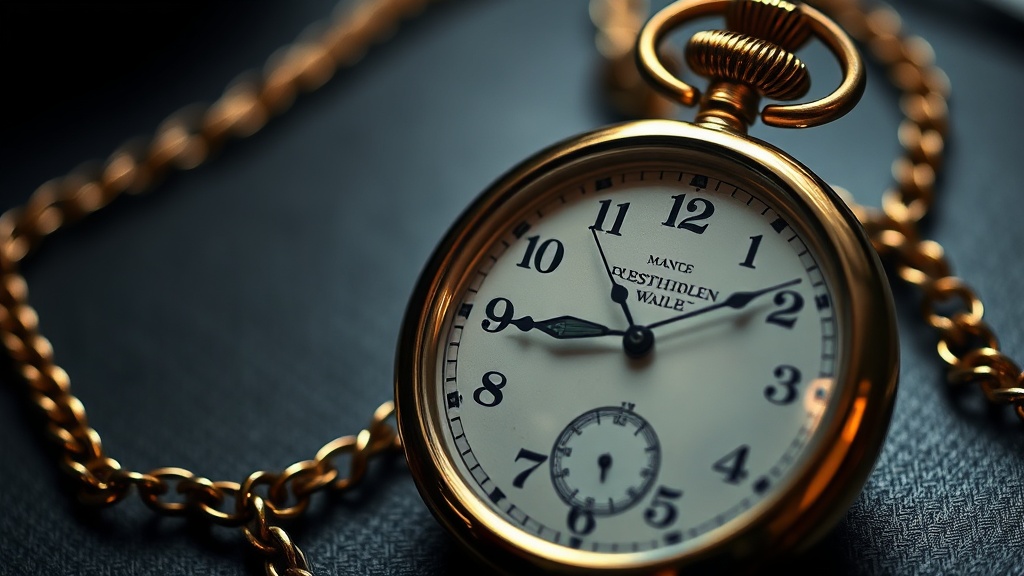
Beyond the Shine: Six Key Factors Determining a Pocket Watch’s Enduring Appeal and Value

What Makes a Pocket Watch Truly Collectible?
In 1891, a tragic train collision in Kipton, Ohio, claimed the lives of eight people. The cause? A faulty pocket watch belonging to one of the engineers, which had stopped for four minutes. This devastating event led directly to the creation of stringent ‘Railroad Grade’ standards for pocket watches, transforming them from mere timekeepers into critical safety instruments and — perhaps inadvertently — cementing the importance of accuracy and reliability in their design and manufacture. But beyond such historical milestones, what truly dictates a pocket watch’s worth to a collector today? It’s not just about age or basic functionality. Understanding the intricate blend of elements that contribute to a pocket watch’s enduring appeal and market value is crucial for any enthusiast, whether you’re a seasoned collector or just starting your horological journey. This guide will help you look past the superficial and assess the deeper characteristics that truly set a valuable piece apart.
Rarity and Scarcity: The Allure of the Unique
True value in collecting often begins with scarcity. A pocket watch produced in limited numbers, perhaps from a short-lived manufacturer or a specific historical period, inherently commands greater interest. Think about pieces made during wartime, when resources were diverted, or those from a pioneering brand’s early experimental phase. These aren’t just watches; they’re capsules of industrial history. Unique features, like an unusually complex escapement or a bespoke case engraving for a notable individual, also dramatically increase rarity. Collectors actively seek these ‘needle-in-a-haystack’ pieces because they represent not just a personal acquisition but a contribution to horological scholarship. Documentation, such as original sales receipts or production records, can significantly bolster a watch’s claim to rarity, transforming a mere suspicion into a verifiable fact. The fewer there are, and the more distinctive their characteristics, the more desirable they typically become. It’s the thrill of owning something truly singular.
Historical Significance: Stories Etched in Time
Every tick of a vintage pocket watch carries echoes of the past, but some resonate more profoundly than others. A watch doesn’t need to have belonged to a president or an explorer to possess historical significance, though such provenance certainly helps. Sometimes, it’s about the technological innovations it represents—the first to incorporate a certain complication, or a benchmark model that pushed the boundaries of precision. Consider watches that played a role in significant societal shifts, like those used by suffragettes, railway workers, or early aviators. These timepieces aren’t just objects; they’re tangible links to human endeavor, progress, and pivotal moments that shaped our world. When a watch’s history can be authenticated—perhaps through old photographs, archival documents, or period advertisements—its narrative power, and thus its value, amplifies considerably. It moves beyond a mechanism to become a storyteller, captivating those who appreciate both mechanical artistry and historical context. For more on the evolution of timekeeping and its impact, you might find resources like