How to Clean, Store, and Display Antique Pocket Watches Safely

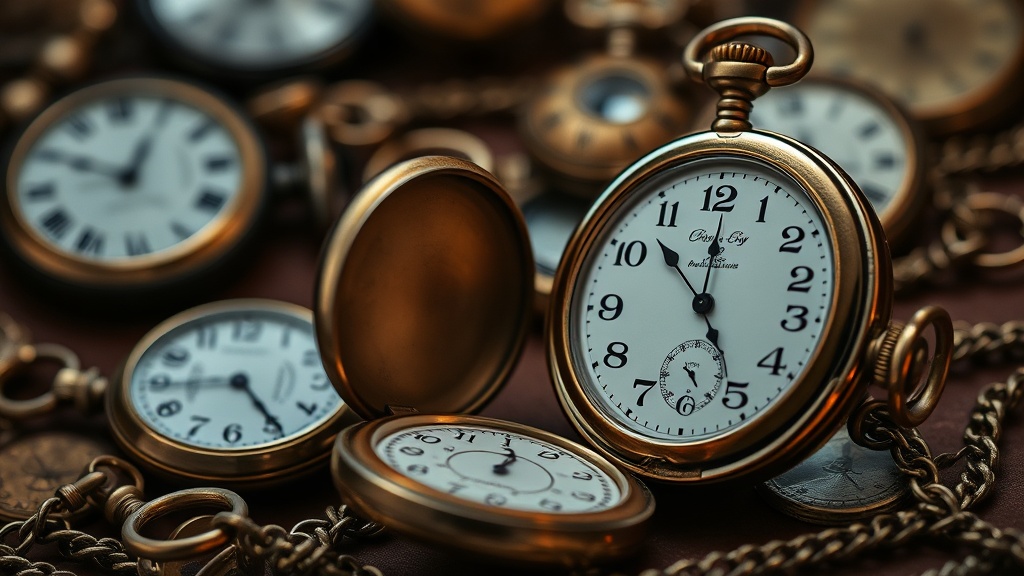
This post covers the practical steps for cleaning, storing, and displaying antique pocket watches so they stay in working order and look their best for years to come. Whether you've inherited a single Elgin railroad watch or you're curating a shelf of verge fusées, the way you handle these pieces directly affects their value, mechanics, and appearance. Antique pocket watches aren't fragile toys—they're precision instruments with age-sensitive oils, thin enamel dials, and cases that react to moisture and light. A few informed habits make the difference between a watch that ticks for another century and one that seizes up in a drawer.
What's the safest way to clean an antique pocket watch without damaging it?
The safest approach is to wipe the exterior with a soft, lint-free cloth and leave any internal cleaning to a qualified watchmaker. Don't pop the case open thinking you'll swab the movement with a Q-tip. (You'll almost certainly leave fibers, scratch the plates, or dislodge a balance staff.) For the case itself, a microfiber cloth—something like a Kimtech Delicate Task Wipe or a simple lint-free optical cloth—is all you need for routine dusting.
If the case is gold-filled or silver and has developed tarnish, a tiny dab of Goddard's Silver Polish on the exterior works well. Keep it away from the hinge, the crown, and any seam where the case back meets the band. For the crystal, warm water and a drop of mild dish soap (Dawn works fine) on a soft cloth is enough. Dry it immediately. Never submerge the watch. The gaskets on antique pieces are usually hardened, cracked, or missing entirely.
That said, some collectors send their pieces to specialists like Cottier Watch Company or local Portland shops such as Colburn Clock & Watch Repair for professional ultrasonic cleaning. A proper service runs $150–$400 depending on complications, but it's the only safe way to remove decades-old oil and dust from the movement without stripping screws or bending pivots.
How should antique pocket watches be stored long-term?
Store them in a stable, low-humidity environment inside a padded box or case that keeps them upright and prevents contact with other metal objects. Temperature swings are the enemy. A closet in a climate-controlled room beats an attic or basement every time. Ideal relative humidity sits between 40% and 50%. In Portland's damp winters, that often means keeping a small dehumidifier running—or at least placing a few canisters of DampRid near the storage area.
For containers, hard cases like the Pelican 1200 with custom foam work well for serious collectors who move their watches or travel to meet-ups. For daily storage at home, the Rapport London Heritage Five Watch Box gives velvet-lined compartments and a glass lid that keeps dust out. If you're on a budget, a simple acid-free cardboard box from University Products will do the job without off-gassing chemicals that tarnish silver.
Worth noting: don't store watches in old leather pouches long-term unless the leather is fully dry and stable. Vintage leather can mold, and the tannins sometimes corrode silver cases over time. If the watch is a hunter-case model, store it closed so the crystal doesn't take pressure from the front lid.
What's the best way to display a pocket watch collection at home?
Display them in a glass-front cabinet or dedicated shadow box that blocks direct sunlight and keeps dust out while still letting you enjoy the view. UV light fades dial enamel and can dry out whatever oils remain in the movement faster than you'd expect. Even indirect daylight through a window adds up over years. Many collectors use IKEA's FABRIKÖR glass-door cabinet lined with acid-free felt, but higher-end options like the Howard Miller Curio Cabinet offer better sealing against dust and humidity.
If you want watches mounted on the wall, shadow boxes from Michaels or custom builds from Frame Central here in Portland work well. Mount the watch with a soft leather strap or a Velcro loop—never a metal hook pressing directly against the case. Keep displays away from kitchens and bathrooms; grease and steam travel farther than you'd think, and they'll find their way inside a hunting case before long.
Storage vs. display solutions compared
| Solution | Best For | Humidity Control | UV Protection | Approximate Cost |
|---|---|---|---|---|
| Pelican 1200 Case | Long-term storage, moving | Good (with silica gel) | Full | $65–$90 |
| Rapport London Heritage Box | Daily storage, bedside | Minimal | None | $180–$220 |
| IKEA FABRIKÖR Cabinet | Home display, medium collections | Minimal | Partial (glass blocks some UV) | $200–$250 |
| Howard Miller Curio Cabinet | Serious display, large collections | Moderate (sealed doors) | Good (tinted glass) | $800–$1,200 |
| University Products Acid-Free Box | Budget long-term storage | Minimal | Full | $15–$30 |
How do you protect pocket watches from humidity and temperature swings?
Use silica gel packets, a small dehumidifier, and a stable room temperature between 65°F and 72°F to keep the environment watch-friendly. Mechanical watches expand and contract with temperature. That movement stresses pivots and can crack enamel dials if the swing is dramatic. Here's the thing: most home HVAC systems cycle enough to create micro-swings. A closet in an interior wall stays steadier than an exterior wall.
For humidity, rechargeable silica gel canisters (like the Dry & Dry brand) are cheap insurance. Check them every few months; when the beads turn pink, recharge them in the oven. In very damp climates, a mini dehumidifier such as the Eva-dry E-333 pulls enough moisture from a small cabinet to matter. The catch? Over-drying is possible. Below 30% relative humidity, bone-dry air can make any remaining gaskets brittle and cause dial lacquer to craze. Aim for that 40–50% sweet spot. A simple digital hygrometer (AcuRite makes reliable $10 models) takes the guesswork out.
What are the biggest mistakes collectors make with antique pocket watches?
The most common mistakes are over-cleaning the movement at home, storing watches face-down on hard surfaces, and displaying them in direct sunlight. Opening a case back without the right tools—like a Bergeon 5537 case knife or a Jaxa wrench for screw-backs—almost always leaves scratches. Worse, a slip of the hand can snap a winding stem or bend the hands against the dial.
Another error is assuming all old watches need to be wound daily. If a watch hasn't been serviced in decades, winding it can grind dry pivots against metal plates. Have a watchmaker check the movement first. As the National Association of Watch and Clock Collectors recommends, "when in doubt, don't wind." Pocket watches aren't waterproof. Even "dust-proof" cases from the 1920s rely on felt washers that have turned to dust by now. Keep them dry. The Smithsonian's conservation guidelines for metal objects stress stable humidity above all else.
A quick note on oils and lubrication
Antique movements were originally lubricated with natural oils—often porpoise jaw oil or later, synthetic watch oils like Moebius 8000. After fifty or eighty years, that oil turns to varnish. You can't fix that with WD-40. (Please don't.) A proper watchmaker will strip the movement, clean it in an ultrasonic bath, and re-oil with modern synthetics. The British Museum's horology department documents how improper lubrication is one of the leading causes of irreversible damage in antique timepieces.
Every antique pocket watch has already outlasted the people who made it, the shops that sold it, and probably a few revolutions. Treating these pieces with a little restraint goes a long way. Clean the outside, leave the inside to professionals, keep the humidity steady, and display them where the light won't bake the dials. The watches will do the rest.