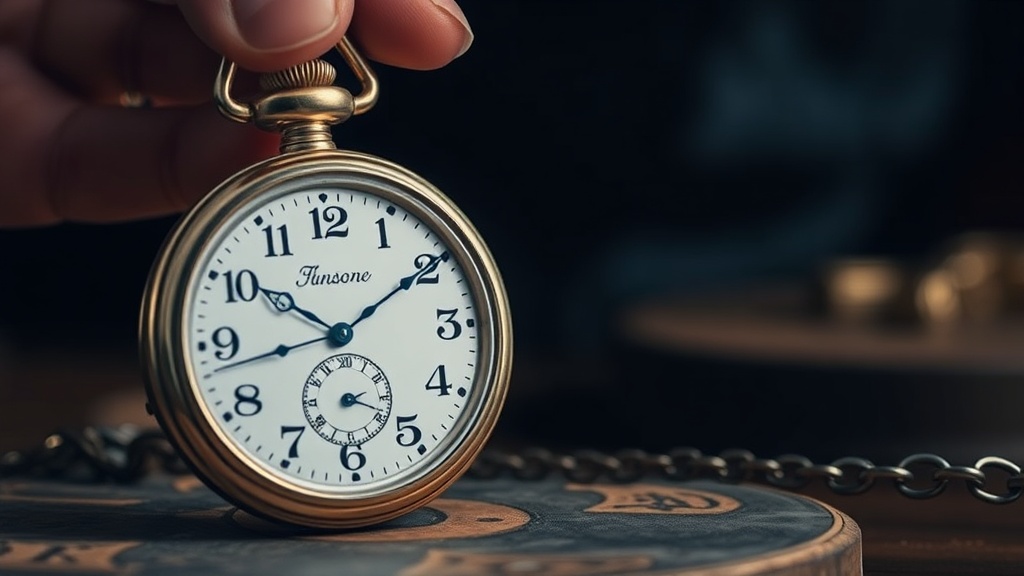
How to Wind a Vintage Pocket Watch Without Damaging the Movement

Quick Tip
Always wind your pocket watch at the same time each day, stopping immediately when you feel resistance to avoid overwinding the mainspring.
How often should you wind a vintage pocket watch?
Most vintage pocket watches need winding once every 24 to 36 hours. The exact interval depends on the movement's power reserve—something you'll learn quickly with regular wear. Over-winding damages mainsprings. Under-winding causes erratic timekeeping. Both hurt the movement.
What's the correct way to wind a vintage pocket watch?
Hold the watch crown between thumb and forefinger. Turn clockwise with gentle, consistent pressure. Stop when you feel resistance—that's the mainspring fully wound. You'll typically need 20 to 40 turns for a complete wind. The key is patience. Forcing the crown strips gears and snaps springs.
Here's the thing: vintage movements aren't modern quartz. They're mechanical—often hand-finished, always temperamental. The National Association of Watch and Clock Collectors recommends storing pocket watches crown-up when not worn. This reduces lateral pressure on the pivot jewels.
The catch? Not all vintage watches wind the same way. Stem-wind models (common after 1850) use the crown. Key-wind antiques—think mid-19th century American railroad watches like the Waltham Vanguard or Elgin B.W. Raymond—need a special key. Never force a stem-wind crown to turn counter-clockwise hoping to "unwind" it. That breaks the click mechanism.
Can you over-wind a vintage pocket watch?
Yes—and it's one of the most common causes of vintage watch damage. When the mainspring reaches full tension, you'll feel distinct resistance. Stop immediately. Continuing past this point stresses the spring at its hook point, often causing permanent deformation or breakage. Replacing a vintage mainspring isn't cheap. Finding original-spec replacements for rare calibers like the Hamilton 992B can take months.
| Watch Type | Winding Method | Risk Level |
|---|---|---|
| Stem-wind (post-1900) | Crown, clockwise only | Low (if gentle) |
| Key-wind (pre-1870) | Square arbor + key | Moderate (wrong key size strips arbor) |
| Automatic conversion | Crown or rotor movement | High (modified movements are fragile) |
Worth noting: temperature matters. Cold metal contracts. Winding a freezing-cold vintage movement creates extra friction. Let the watch reach room temperature first. That said, don't store watches near heat sources either—dry lubricants gunk up faster above 75°F.
For collectors serious about preservation, the American Watchmakers-Clockmakers Institute maintains a directory of certified repair specialists. DIY servicing sounds romantic. It rarely ends well for first-timers. A single slip with a screwdriver on a 120-year-old pillar plate—well, you'll wish you'd called Portland's Old Town Clock Shop instead.
Wind daily. Wind gently. Your grandfather's Elgin (or that eBay Hamilton you just scored) will thank you—silently, of course, one tick at a time.