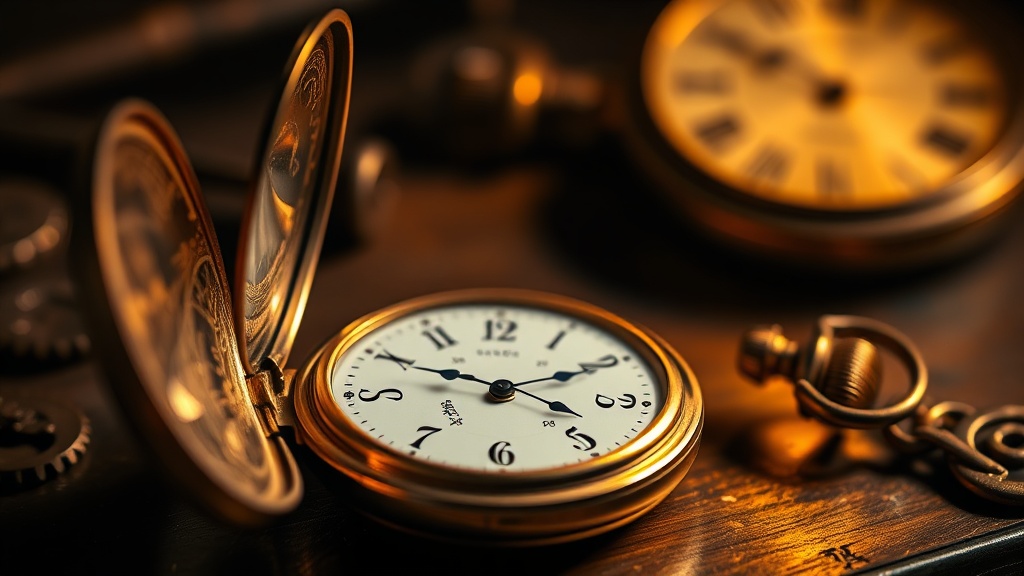
Keeping Your Vintage Pocket Watch Case Polished and Bright

How do I keep my vintage pocket watch case looking new?
You’ve likely wondered why a beautiful gold-filled or sterling silver case has gone dull, perhaps even looking slightly tarnished or greasy after just a few months in your pocket. This guide covers the specific methods for cleaning and maintaining different metal types—from gold-filled to silver—to ensure your timepiece maintains its luster without causing permanent damage.
Maintaining a vintage pocket watch is a delicate balancing act. You want that bright, mirror-like shine, but one wrong move with an abrasive cloth can leave micro-scratches that ruin the value of a rare piece. It’s not just about aesthetics; it's about preservation. If you’re holding a high-end piece, like a Patek Philippe or an early Waltham, you have to be much more careful than you would with a modern piece of jewelry.
Most collectors make the mistake of thinking "cleaner is better." It isn't. In the world of vintage horology, less is almost always more.
What is the best way to clean a silver pocket watch case?
The best way to clean a silver pocket watch case is to use a specialized silver polishing cloth rather than a liquid dip. Liquid-based cleaners can seep into the gaskets or the movement if you aren't incredibly careful, and they can be quite harsh on the metal's surface.
Silver tarnishes because of a chemical reaction with sulfur in the air. It’s a natural process, but it can make a stunning piece look old and neglected. Here is how to handle it safely:
- The Microfiber Method: Start with a high-quality jewelry cloth. These are often impregnated with a tiny amount of polishing agent. Rub gently in circular motions.
- The Silver Dip (Use with Caution): If the tarnish is heavy, a quick dip in a commercial silver cleaner might work, but I don't recommend it for watches with intricate engravings. The liquid can get trapped in the crevices.
- The Baking Soda Trick: For those who like DIY solutions, a paste of baking soda and water can work, but use it sparingly. It's an abrasive.
A quick tip: always check if your case is solid sterling silver or silver-plated. If it's plated, you'll rub the silver right off if you're too aggressive. (I've seen many collectors accidentally ruin a piece by being too enthusiastic with a polishing cloth.)
If you're working on a piece with heavy engravings—think of those ornate Victorian patterns—avoid the dip entirely. The liquid will settle in the grooves and, if not rinsed perfectly, can cause much worse tarnishing later.
How do I clean a gold-filled pocket watch?
You should clean gold-filled watches using only a soft, dry cloth and very minimal moisture to avoid damaging the thin layer of gold.
This is where many beginners get tripped up. "Gold-filled" is not the same as "solid gold." A gold-filled watch has a thick layer of gold bonded to a base metal (usually brass or copper). If you use a heavy-duty metal polish or a harsh chemical, you can actually strip that gold layer away, exposing the base metal underneath. Once that happens, the damage is permanent.
Here is a comparison of how to treat different common vintage watch metals:
| Metal Type | Primary Risk | Recommended Tool |
|---|---|---|
| Solid Gold | Scratches | Soft Microfiber Cloth |
| Gold-Filled | Stripping the plating | Damp (not wet) cloth |
| Sterling Silver | Tarnish/Oxidation | Silver Polishing Cloth |
| Nickel/Silver | Corrosion | Dry Microfiber |
If your gold-filled watch looks dull, it's often just oils from your skin. A slightly damp cloth—not dripping, just barely moist—is usually enough to lift the grime. Avoid using any jewelry cleaners found in big-box stores. They are designed for rings, not the complex geometry of a pocket watch.
Worth noting: if the "gold" looks patchy or has reddish spots, you've likely worn through the plating. At that point, no amount of polishing will bring the gold back. You'll need a professional jeweler to re-plate it.
Can I use water to clean my watch case?
You should only use water to clean the case if it is a solid metal piece and you are certain the case is water-resistant, but even then, you should never submerge the watch.
Most vintage pocket watches are anything but water-resistant. Even if the case looks tightly sealed, moisture is the enemy of the internal movement. If water gets inside, it can cause rust on the balance wheel or the hairspring, which is a death sentence for a vintage timepiece.
If you absolutely must use water to remove a stubborn spot of grime, follow these steps:
- Use a cotton swab (Q-tip) dipped in a tiny amount of distilled water.
- Clean only the exterior metal surfaces.
- Avoid the crystal (the glass) and the winding stem area.
- Dry it immediately with a clean, dry cloth.
I've found that a specialized product like the Kona Jewelry Polishing Cloth is much safer than any liquid. It gives you control. You aren't splashing liquid into the hinges or the crown. It's much more predictable.
The catch? Even with a dry cloth, you have to be careful around the "lugs" or the areas where the case meets the ring (the bow). These areas collect a lot of debris, and if you push too hard, you're just pushing dirt deeper into the cracks.
If you have a piece that is truly filthy—perhaps a piece you found at an estate sale that hasn't been cleaned in fifty years—don't try to be a hero. Take it to a professional. A watchmaker's expertise is worth the investment to avoid a costly mistake.
Check out the Library of Congress digital collections if you want to see how these pieces were originally presented in historical contexts; it can give you a better idea of the "intended" look of a pristine vintage piece.
Keep your tools organized, your movements gentle, and always remember: you're the caretaker of a piece of history. Treat it with respect, and it'll stay bright for another century.
Steps
- 1
Assess the Metal Type
- 2
Prepare a Soft Microfiber Cloth
- 3
Use Lukewarm Water and Mild Soap
- 4
Dry Thoroughly with a Lint-Free Cloth
- 5
Avoid Harsh Abrasives