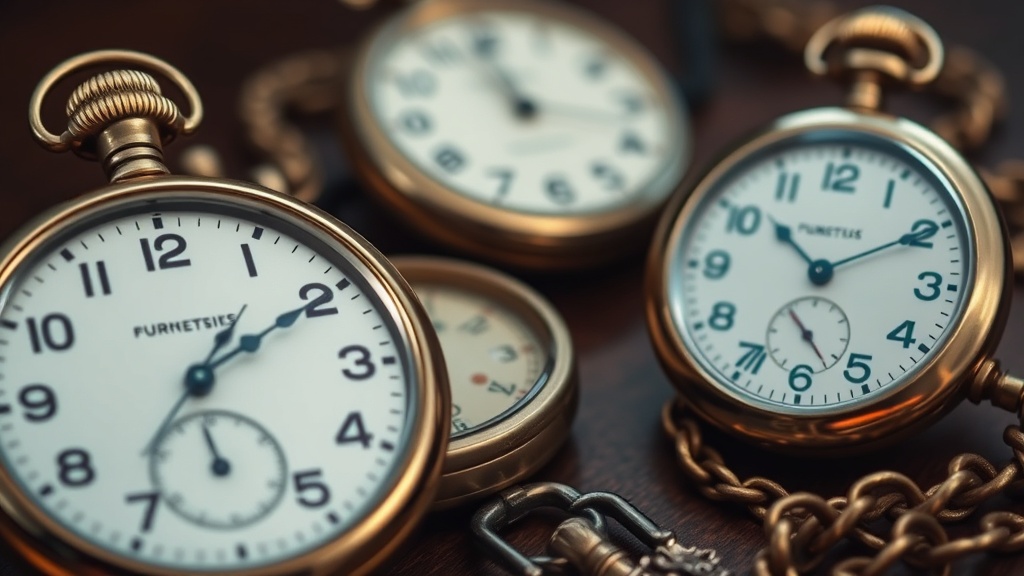
The key Guide to Collecting Vintage Pocket Watches

Vintage pocket watches represent more than timepieces—they're tangible connections to craftsmanship eras gone by. This guide covers everything a new collector needs: identifying quality movements, understanding case materials, spotting red flags, and building a collection that holds value. Whether drawn to the intricate mechanics of a Hamilton 992 or the elegance of an Elgin Father Time, the knowledge here will help you buy smart and avoid costly mistakes.
What Makes a Pocket Watch "Vintage" Versus Antique?
Here's the thing—there's no universal rule, but collectors generally agree. Watches made between 50 and 100 years ago fall into the vintage category. Anything older than 100 years qualifies as antique. That puts vintage pocket watches roughly between the 1920s and 1970s. The catch? Some late-era pocket watches from the 1960s and 70s barely qualify as collectible. Quality matters more than age alone.
American pocket watch manufacturing peaked between 1870 and 1930. Companies like Waltham, Elgin, and Hamilton produced millions of movements during this golden age. These watches dominate the vintage market today. Swiss makers—Patek Philippe, Vacheron Constantin, Audemars Piguet—crafted higher-end pieces in smaller quantities. They're harder to find and command premium prices.
Condition trumps age every time. A mint 1950s Hamilton 992B beats a battered 1890s Elgin every day of the week. (Well, unless that Elgin happens to be a rare grade with original box and papers—then we're talking.)
How Do You Identify Quality Movement Grades?
The movement— the internal mechanism—determines a pocket watch's true value. Look for jeweled bearings first. Quality watches use synthetic rubies at friction points to reduce wear. A 7-jewel movement represents entry-level. 15 to 17 jewels indicate mid-grade. The best railroad-grade watches pack 21 or 23 jewels.
American manufacturers often stamped grade numbers or names on movements. Hamilton's system remains the clearest: 992, 992B, 950, and 950B represent their premier railroad chronometers. Elgin used numbers like 290, 306, or the coveted Father Time grade. Waltham's Vanguard and Crescent Street grades command respect.
Adjusted movements matter. High-grade watches were "adjusted" for accuracy across different positions and temperatures. Look for markings like "Adjusted 5 Positions" or "Adjusted to Temperature." These indicate a watch that originally performed to strict standards—not just a cheap timekeeper mass-produced for general sale.
Here's what separates the wheat from the chaff:
- Damascening: Those swirling patterns on high-grade movements? They're not just decorative—they indicate quality finishing work.
- Screw settings: Jewels held by screws (not pressed in) allow for servicing. A sign of thoughtful construction.
- Gold settings: The best railroad watches used solid gold jewel settings—not brass or steel.
- Regulator types: Swann regulators (with micrometer adjustment) beat simple index regulators for precision.
What Case Materials Should Collectors Prioritize?
Case material affects both value and preservation. Solid gold cases obviously top the hierarchy—14K and 18K gold from makers like Waltham or Illinois command strong premiums. But don't overlook gold-filled cases. These sandwich a brass core between gold layers. Quality gold-filled cases (marked "20-Year" or "25-Year") wear well and represent excellent value.
Silver cases present an interesting niche. Coin silver (90% pure) and sterling silver (92.5%) cases appear frequently on older watches. They tarnish—expect that patina—but clean up beautifully. The weight feels substantial in hand. That heft signals quality.
Avoid base metal cases for serious collecting. Nickel, gunmetal, or chrome-plated cases were budget options. They dent easily. They corrode. They rarely hold value. (That said—a perfect railroad chronometer in a base metal case? Still worth owning. The movement matters most.)
| Case Material | Typical Era | Value Range | Collector Notes |
|---|---|---|---|
| Solid 18K Gold | 1880-1930 | $800-$5,000+ | Hallmarks indicate purity; weight confirms authenticity |
| Solid 14K Gold | 1890-1950 | $400-$2,500 | Most common gold grade; look for "14K" inside caseback |
| Gold-Filled (20-Year) | 1900-1940 | $75-$400 | Wear-resistant; avoid worn-through areas near bow |
| Sterling Silver | 1880-1920 | $150-$600 | Look for "STERLING" or lion passant marks |
| Coin Silver | 1870-1895 | $100-$400 | Pre-dates sterling standard; often unmarked |
| Nickel/Gunmetal | 1890-1950 | $25-$150 | Budget grade; movement quality varies widely |
Which Brands Offer the Best Entry Points?
New collectors often overextend financially. Don't. Start with accessible American brands that deliver mechanical quality without crushing the wallet. The Hamilton 992—produced from 1903 through the 1940s—represents perhaps the best value in vintage pocket watches. These 21-jewel railroad chronometers were built to last. Prices range from $200 for a runner to $800+ for pristine examples with original boxes.
Elgin offers even more affordability. Their B.W. Raymond and Father Time grades rival Hamilton's best but sell for 30-40% less. The trade-off? Elgin produced more watches overall, so rarity suffers slightly. For pure collecting enjoyment at $100-300 price points, Elgin can't be beat.
Waltham dominated early American watchmaking. Their 16-size Riverside and Vanguard grades offer excellent construction. Earlier Waltham models (from the 1880s-90s) feature beautiful damascening and unique regulator designs. They're visually striking display pieces.
Worth noting: South Bend and Illinois produced fewer watches but maintained high standards. The South Bend "Studebaker" grade and Illinois "Bunn Special" command collector attention. Smaller production numbers mean scarcity—and often, better investment potential long-term.
What Red Flags Should You Watch For?
Condition issues kill value. Learn to spot them before money changes hands. Hairline cracks in enamel dials—common on porcelain-faced watches—represent permanent damage. Repairs rarely look right. A perfect dial adds 30-50% to value. A cracked one? The discount is steep.
Case repairs matter too. Solder marks inside cases indicate previous damage. Gold-filled cases with worn-through plating expose brass underneath—look at the bow (the ring for the chain) and case edges where wear concentrates. Repaired hinges on hunting cases (the ones with covers) often fit poorly. They should snap shut with authority.
Movement problems require careful evaluation. A broken balance staff means the watch won't run—repairable, but costly. Rust anywhere suggests water damage or poor storage. Bent hands touching each other or the dial indicate amateur handling. (That said—a non-runner with a clean movement might just need service. Don't dismiss it automatically.)
Mismatched parts destroy authenticity. Serial numbers on the movement and case rarely match—manufacturers sold them separately—but the style should align. A 1910 movement crammed into a 1940s case raises eyebrows. Aftermarket dials with repainted numerals look fresh but hurt value significantly. Originality commands respect.
How Should You Store and Maintain Your Collection?
Pocket watches don't like extreme environments. Temperature swings cause expansion and contraction. Humidity breeds rust. Keep your collection in a climate-controlled space—think 65-75°F with moderate humidity. Watch rolls or padded boxes prevent scratches and cushion against drops.
Winding matters more than most realize. Vintage mainsprings lose elasticity over decades. Never overwind—when you feel resistance, stop. For regular wearers, daily winding keeps lubricants distributed. For display pieces, wind them monthly to prevent mechanism seizure. (A seized watch often requires complete disassembly—expensive and risky.)
Service intervals depend on use. A pocket watch worn daily needs professional cleaning every 3-5 years. The cost—typically $150-300 from qualified horologists—prevents catastrophic wear. Display pieces can stretch to 7-10 years. Portland has several excellent watchmakers who specialize in vintage American pieces; seek them out rather than generic jewelry stores.
The best collectors handle their watches properly. Open cases by the bezel edge—never the crystal. Support the movement when removing it from the case. Use proper watch keys for key-wind pieces rather than improvising with household items. These habits preserve condition and protect your investment.
Collecting vintage pocket watches rewards patience. Start with one quality piece rather than three mediocre ones. Learn its movement, its history, its quirks. The community—whether through NAWCC chapters or online forums—offers endless knowledge. Each watch tells a story. Your job isn't just owning them—it's keeping those stories alive for the next generation of collectors.