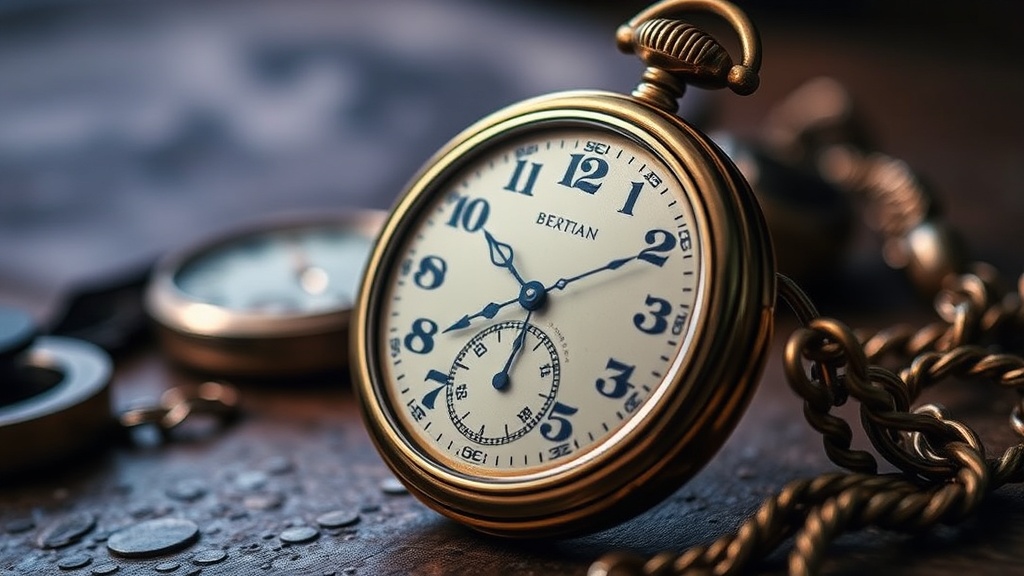
Uncovering the Past: Identifying and Dating Your Vintage Pocket Watch

Why is Identifying Your Pocket Watch So Important?
Understanding the specifics of your vintage pocket watch — its maker, era, and unique characteristics — isn't just about satisfying curiosity; it's about appreciating its place in horological history and safeguarding its value. Whether you're a new collector, have inherited a family heirloom, or are considering a purchase, accurate identification is your first and most critical step. It helps you understand the craftsmanship, the technological advancements of its time, and often, the story of its previous owners. Knowing what you have lets you make informed decisions about care, potential repairs, and of course, its market worth. Without this foundational knowledge, you're essentially looking at a beautiful object with a missing label, and that's not how we do things here at pocketwatches.blog.
We're going to walk through the methodical process of identifying and dating these miniature marvels. It involves a bit of detective work, paying close attention to visual cues, and knowing where to dig for information. Don't worry, you don't need to be an expert to start. You just need a keen eye and a willingness to explore the fascinating details that each watch holds. By the end of this guide, you'll be well-equipped to start uncovering the secrets of your own collection.
What Clues Does the Case Offer About Your Pocket Watch?
Before you even think about opening your watch (and please, only do so if you're comfortable and know how to avoid damage), the case itself is a treasure trove of information. It can tell you a lot about the watch's origin, the quality of its construction, and sometimes even its approximate age.
Decoding Case Materials and Styles
The material of your watch case is often the first, most obvious clue. Is it gold, silver, gold-filled, nickel, or steel? Gold and silver cases were common for higher-end watches, with their purity often stamped inside. Gold-filled cases, a more economical option, involve a layer of gold mechanically bonded to a base metal; these are typically marked with terms like '10K GF' or '20 Year'. Nickel and steel were used for more utilitarian or entry-level pieces. The style of the case also offers hints—an open-face design is straightforward, while hunter-case watches have a hinged cover over the crystal, and demi-hunter cases feature a small crystal in the center of the metal cover. These styles evolved over time, giving you a preliminary timeframe for your watch.
The Story in the Hallmarks
Open the back cover of your pocket watch (if it's a hinged case) or carefully remove the back if it's a snap-on type. Inside, you'll often find a series of stamps or 'hallmarks.' These are especially prevalent on European watches and indicate the metal's purity, the assay office where it was tested, and often a date letter that corresponds to the year of manufacture. For instance, a small anchor mark might indicate the Birmingham assay office in England, and a specific letter within a shield could pinpoint the exact year. American watches less frequently feature these intricate hallmarking systems, though you'll still find maker's marks and material purity stamps.